cricketarena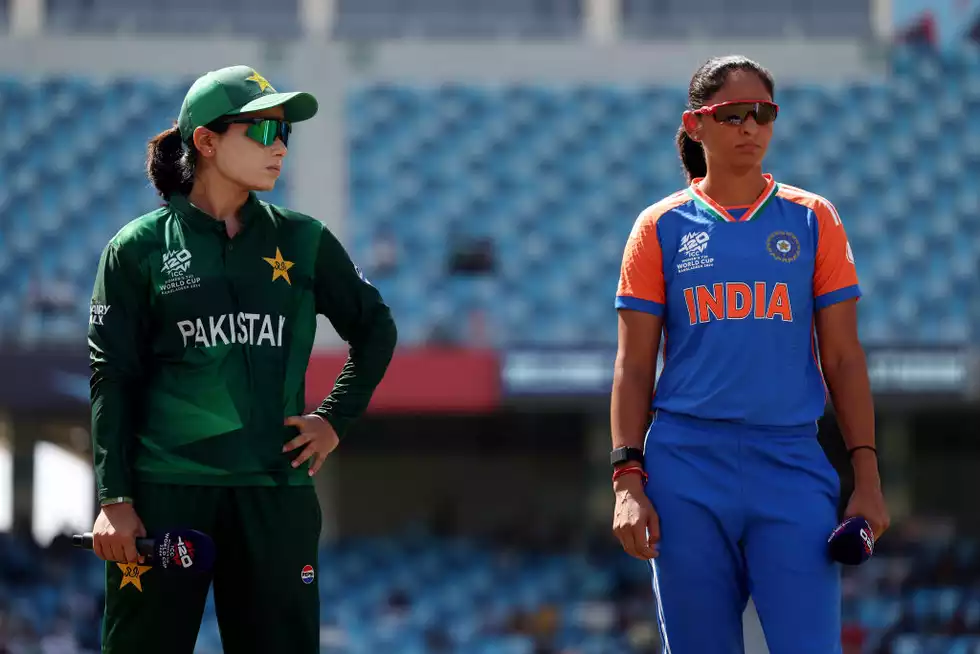
In one of the most anticipated matches of the ICC Women’s World Cup 2025, India and Pakistan are slated to face off amid a backdrop of political tensions and sporting history. The narrative headline says it all: “Focus solely on cricket.” That phrasing reflects how much effort organizers, teams, and media are putting into keeping the spotlight on sport—even when undercurrents of rivalry, national sentiment, and diplomatic friction threaten to dominate. The Times of India+1
This match is not just a contest between two cricketing sides; it’s a test of restraint, symbolism, and whether cricket can rise above statecraft, at least for a day. In this blog, we’ll explore the backdrop, what both teams stand to gain, the challenges of neutrality, and why this India–Pakistan clash in women’s cricket matters more than just the runs on the board.
The Broader Context: Politics, Sport & Neutral Grounds
The tension between India and Pakistan is not new. In cricketing terms, their rivalry is one of the most emotionally charged in the world. Spectators, players, officials—all feel the weight. Wikipedia
However, recent years have seen this divide sharpened in public events: decisions over venue, trophy presentations, handshake refusals, and off-field controversies have made cricket a proxy battleground of national pride and politics. AP News+1
For this Women’s World Cup, a major accommodation has already been made: Pakistan will play all its matches in Colombo (Sri Lanka), even though India and Sri Lanka are co-hosts of the tournament. This is a conscious effort to remove direct political friction over travel, security, and protocol. Reuters
The phrase “focus solely on cricket” is itself a signal: organizers are bracing for media and fan attention to drift toward off-field narratives, and want to rein it in. That makes this clash a microcosm of how sport and politics intersect, and whether we can compartmentalize one from the other.
Stakes & Motivation: More Than Just a Win
For India
- Maintain supremacy: India has historically held upper hand over Pakistan in women’s cricket. A victory would continue that legacy.
- Psychological edge: Winning such a match reassures the team under scrutiny—especially in a World Cup context where pressure is magnified.
- Signal of composure: Handling this match smoothly, with minimal distractions, reflects the maturity of Indian women’s cricket.
For Pakistan
- Breaking the pattern: A win here would be more than a result—it would be symbolic, a morale-booster, a statement that Pakistan’s women’s cricket is forging its own path.
- Raising the profile: Success in high-visibility matches helps generate more support, funding, and recognition at home.
- Momentum in tournament: Since each game in a World Cup has weight, an India victory for Pakistan could alter group dynamics and standings.
These motivations aren’t abstract—they embed psychological intensity into every ball, every over, every close call.
Challenges: Ensuring Cricket Remains Front & Center
1. Media and Public Narratives
No matter how much one wants “solely cricket,” headlines, social media, and fan commentary will gravitate toward politics. Every gesture on field, every exchange between players, even uniforms or flag displays, will be parsed. The teams must guard against letting off-field noise bleed into performance.
2. Emotions & Distraction
Players themselves carry national identities. It’s easier said than done to compartmentalize. A bad call, a heated appeal, or a contentious umpiring decision can trigger emotional flareups that distract from the game plan.
3. Security & Logistics
Travel, accommodation, security protocols, media access—all come with heightened sensitivity when India and Pakistan pair up. The decision to host Pakistan in neutral venues (Colombo) helps, but on match day, everything must run cleanly. Reuters
4. Pressure on Officials & Umpires
Neutral decision-making becomes paramount. Any perception of bias (rightly or wrongly) will quickly amplify tensions. The officiating panel has to withstand scrutiny.
What to Watch: Key Match Dynamics & Markers
- Opening overs vs new ball: Which side gets early breakthroughs or solid foundations will set the tone.
- Spin vs pace: In Sri Lankan pitches, spin often plays a bigger role. Teams that adapt their spin attack and handling of spin will gain advantage.
- Middle over control: This is where batting depth, rotation, and partnerships count.
- Death over execution: Final 10 overs often decide margins. Composure under pressure will be tested heavily.
- Non-playing gestures & protocols: Toss, bowler run-ups, celebrations, handshakes—or lack thereof—will be closely watched. How teams handle those moments can shape off-field perception.
- Fan & broadcast tone: How media frames this match (pre-match promos, interviews, narratives) will challenge the “cricket only” ideal.
Potential Pitfalls & What Could Go Awry
- A single controversy (e.g. comments from a player or coach) could dominate headlines, overshadowing the match.
- Emotional reactions—sledges, verbal exchanges, dissent—could derail focus.
- Rain or interruptions in such high-tension games often magnify every decision (DLS calls, revised targets).
- If one side starts poorly, spectators may prematurely declare “politics wins,” undermining the spirit of neutral contest.
Final Reflections: Why This Match Matters
In women’s cricket, spotlight moments like India vs Pakistan elevate visibility, fan interest, and legitimacy. A clean, competitive match where cricket dominates the narrative would be a win beyond the scoreboard. It would reflect the potential of sport to unite—even amid discord.
But make no mistake: this match is also a litmus test. Can administrators, media, players, and fans truly channel energy into cricket and away from politics—even for a few hours? Can the rivalry, often a lightning rod for national tensions, be held to respectful competition?
When India and Pakistan women take the field—amid lingering tensions, symbolic constraints, diplomatic echoes—they carry with them more than bat and ball. They carry expectations, hope, and a chance to affirm that sometimes, just for the duration of play, cricket itself is the message.