sureshpurohit1769@gmail.com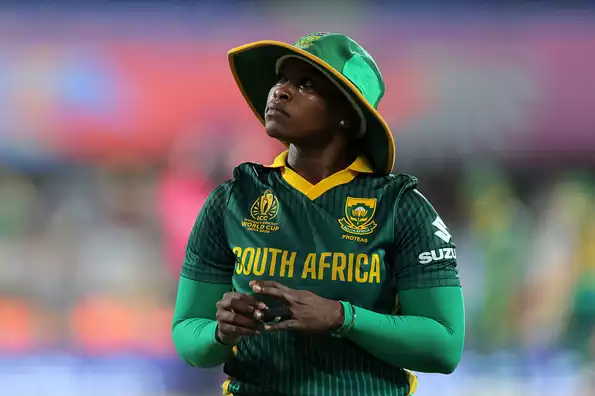
South Africa left-arm spinner Nonkululeko Mlaba has received an official reprimand for a Level 1 breach of the ICC Code of Conduct during her team’s Women’s World Cup league match against India on Thursday. The sanction stems from her send-off of Harleen Deol after taking the batter’s wicket, an action match officials deemed capable of provoking an aggressive response. According to the match report and ICC media release, the incident occurred in the 17th over, and Mlaba accepted the charge.
Level 1 violations are the lowest tier within the ICC’s disciplinary framework, yet they serve a clear purpose: to uphold standards of respect and behavior on the field. In practice, a first-time Level 1 offence typically attracts an official reprimand and, in many cases, a single demerit point added to a player’s record. That’s exactly what happened here, with Mlaba handed the minimum sanction for conduct judged to be provocative but not abusive or threatening.
The flashpoint itself was simple but significant. After deceiving Deol and completing a key breakthrough, Mlaba waved the departing batter off. Gestures of that kind—however fleeting—are closely watched under the game’s spirit and the letter of law that aims to preempt escalation. The match officials, aligning with precedent around exaggerated send-offs or taunts, reported the behavior; the match referee then issued the reprimand under the Code. Mlaba did not contest the charge, a step that closed the matter without the need for a formal hearing.
Why does a relatively minor gesture draw attention at all? Cricket’s playing conditions and the ICC Code explicitly aim to set a line between passionate celebration and conduct that could invite confrontation. The boundary is often judged by context: body language, timing, proximity to the dismissed player, and whether the act could reasonably incite a response. In recent tournaments, match referees have consistently acted on over-the-top send-offs, visible dissent, or gestures directed at opponents, tightening the game’s norms around how players celebrate wickets. Mlaba’s case falls squarely within that evolving standard, where the message is clear—celebrate the moment, not the opponent’s dismissal.
From a South Africa perspective, the reprimand is unlikely to cause any immediate selection or availability ramifications. A solitary demerit point sits on a player’s disciplinary record but does not, by itself, trigger a suspension; only an accumulation over a rolling period leads to bans. The bigger talking point is the reminder to a youthful, energetic squad about channeling intensity constructively. South Africa’s campaign has been fueled by a punchy brand of cricket, with bowlers like Mlaba tasked with taking wickets through pressure and guile. Keeping celebrations within the Code’s limits ensures the focus stays on skill execution and match control rather than avoidable disciplinary noise.
For India, the dismissal of Deol was a small, tactical battle within the larger strategic war of a World Cup league stage. Deol’s role—anchoring and transitioning in the middle overs—makes her wicket a premium target for a left-arm spinner who angles the ball across the right-hander and threatens both edges. The send-off briefly stole the spotlight from the cricketing contest itself, but in competitive tournament play, teams often use such episodes as internal reminders: absorb the moment, maintain calm, and respond through discipline and plans rather than emotion.
There’s a broader lens to consider: women’s international cricket is drawing heavier viewership, denser media coverage, and sharper scrutiny year-on-year. With that growth comes an emphasis on role modeling and the optics of sportsmanship. The ICC’s swift, measured response demonstrates a governance posture that is neither punitive for its own sake nor lax; instead, it is calibrated to the offence. By handling Mlaba’s gesture with a reprimand and demerit point, the game’s administrators reinforce expectations without overshadowing the tournament narrative.
From a performance standpoint, Mlaba remains central to South Africa’s spin plans. Her left-arm angle, powerplay accuracy, and ability to attack pads and stumps make her a valuable middle-overs option, especially on surfaces offering any grip. The incident does not diminish her on-field utility; if anything, the takeaway is psychological—trust your skills, celebrate within bounds, and move on quickly. South Africa’s campaign will be better served by Mlaba doubling down on her discipline at the crease and in her follow-through, keeping emotions channeled into fields, fields set, and lengths hit.
As the league phase tightens and net run rates, head-to-heads, and micro-battles in the middle overs start to loom large, composure is currency. A team that controls its reactions often controls the tempo. For South Africa, a small brush with the Code might be the timely nudge to keep celebrations team-centric and moment-focused. For the tournament, the message is equally useful: passion is welcome; provocation is not. With the reprimand recorded and accepted, all involved can pivot their attention back to the cricket itself—plans for right-left matchups, handling wrist spin and cross-seam, maximizing the second powerplay, and protecting the death overs—all the places where trophies are actually won.
In short, this was a routine but instructive intervention by the officials. Mlaba’s send-off crossed a clear line, the Code addressed it proportionately, and the player accepted the decision. The match—and the tournament—move forward, with a small but firm reminder that the spirit of cricket lives not in muted celebrations but in respectful ones.