Shubman Gill’s Captaincy: Leadership Style, Tactics, and How He Compares with Previous Captains
 cricketarena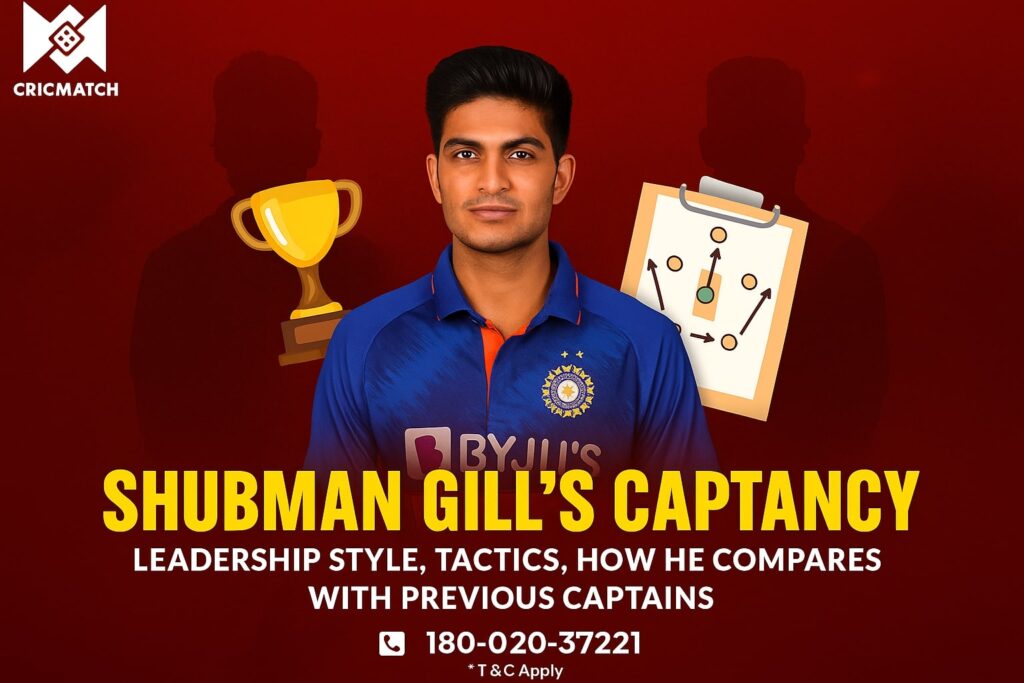
Leadership in cricket often shapes the identity of a team. It’s not just about tossing the coin or setting the field — it’s about vision, temperament, and inspiring collective performance. When Shubman Gill was handed the captaincy role, it marked a significant moment for Indian cricket. At a young age, he represents a modern, calm, and analytical approach to leadership, different from but influenced by the legends who came before him.
A New-Age Leader
Gill’s style stands out because it reflects both composure and calculation. He isn’t flamboyant at the toss or theatrical in celebrations, but his tactical clarity is evident in how he positions his players and paces his decisions.
- Calm under pressure: Even in tight matches, he avoids overreacting, a trait that often keeps the dressing room composed.
- Analytical mindset: He studies opponents closely and adapts strategies based on real-time scenarios rather than rigid pre-match plans.
- Player-first approach: Younger teammates have praised his ability to communicate clearly and back them without micromanaging their game.
This modern, understated leadership fits well with a generation of players who thrive on mutual respect rather than top-down authority.
Tactical Awareness on the Field
Gill’s captaincy has already shown signs of tactical maturity beyond his years. Unlike some young captains who tend to stick to conventional plans, he’s been quick to experiment with angles, bowling changes, and boundary placements.
- Smart Field Placements
Instead of deploying fixed fields, Gill adjusts placements based on match tempo. He uses boundary riders creatively, making it harder for batters to find easy gaps. - Bold Bowling Rotations
He isn’t hesitant to bring strike bowlers back earlier than expected or trust younger bowlers during pressure overs. This flexibility keeps the opposition unsettled. - Reading Conditions Quickly
One of his underrated strengths is how fast he reads surfaces. Whether it’s slowing down the pace attack on a dry pitch or introducing spinners early, Gill’s quick assessments help India control passages of play effectively.
How He Differs from Past Captains
India has had a line of influential leaders, each leaving a distinct stamp. Gill represents the next chapter in that legacy.
- Sourav Ganguly led with aggressive, chest-out confidence, building a fearless team culture.
- MS Dhoni was defined by calm control, trust in his players, and tactical minimalism.
- Virat Kohli brought intensity, athleticism, and a never-back-down mentality.
Gill is different. His leadership blends Dhoni’s composure with a touch of Ganguly’s belief in young talent — but without overt aggression. Unlike Kohli, he focuses less on emotional energy and more on structured game management.
He belongs to a data-driven generation that values preparation and clear communication over fiery on-field personas.
Communication & Dressing Room Impact
A captain’s leadership isn’t just visible on the field but also in how they manage their team behind the scenes.
Gill’s communication style is straightforward — short, clear, and inclusive. Instead of lengthy team talks, he prefers quick tactical conversations and individual feedback. This has built an atmosphere where players feel empowered to contribute ideas without fear of being overruled.
His approach is particularly effective with younger players, who find it easier to connect with a captain closer to their age. Senior players, too, have praised his balance between respecting experience and asserting authority when required.
Balancing Batting and Leadership
One of the biggest challenges for young captains is maintaining their personal performance. Gill has embraced that responsibility with impressive discipline.
- Leading by example: His batting remains technically sound and mentally strong, setting a standard for the rest of the lineup.
- Situational awareness: He understands when to anchor and when to accelerate, often guiding the innings with quiet authority.
- Workload clarity: By trusting his senior players to take initiative, Gill doesn’t burden himself with micromanagement, allowing him to focus on his own game as well.
This balance is reminiscent of how Dhoni and Kohli managed their dual roles successfully during their peak years.
A Leader Built for Modern Cricket
Gill’s captaincy reflects modern cricketing leadership: strategic thinking, trust in data, adaptability, and a calm exterior. Unlike many captains of the past, his style isn’t built around one dominant personality but around enabling a system where everyone contributes.
This team-oriented approach will be crucial in multi-format cricket, where adaptability and clarity often determine success. His early captaincy signs indicate a leadership arc that could define India’s next decade.
Final Thoughts
Shubman Gill isn’t trying to be the next Ganguly, Dhoni, or Kohli. He’s shaping his own identity — one built on clear thinking, composure, and a collaborative spirit. His leadership represents a shift from emotionally charged captaincy to structured, modern game management.
As India looks ahead to major tournaments, Gill’s evolution as a captain could become one of the defining stories of this era.
For fans tracking leadership trends, player performances, and tactical discussions, Cricmatch Login gives access to in-depth analyses and match breakdowns. Those new to the platform can Cricmatch Signup to explore exclusive leadership insights, series previews, and expert commentary as Gill’s captaincy journey unfolds match by match.