India’s Preparation for the Next ICC Tournaments: Building a Strong Foundation for Global Success
 sureshpurohit1769@gmail.com
Indian cricket has entered a new era. Following a period of transition marked by the retirement of several senior players and the emergence of exciting young talent, the Board of Control for Cricket in India (BCCI) and the team management are focused on preparing a squad capable of dominating future ICC tournaments. With the ICC Men’s Cricket World Cup, T20 World Cup, and World Test Championship remaining the biggest prizes in international cricket, India’s preparations extend far beyond bilateral series. Every match, training session, and squad selection now plays a crucial role in shaping the team’s future.
A New Generation Takes Charge
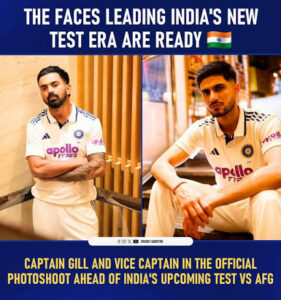
One of the most significant developments in Indian cricket is the rise of a younger core. Players such as Shubman Gill, Yashasvi Jaiswal, Ruturaj Gaikwad, Tilak Varma, and several promising bowlers represent the next generation expected to carry Indian cricket forward.
Leadership has also evolved. With experienced veterans stepping aside in various formats, younger leaders are gaining valuable experience. This transition allows India to build a team that can remain competitive for many years while maintaining the aggressive and fearless style that has become synonymous with modern Indian cricket.
Fitness: The Biggest Priority
Fitness has become the cornerstone of India’s preparation for future ICC events. The team management has repeatedly emphasized that maintaining player fitness is essential for sustained success in major tournaments. Injuries to key players in recent series have highlighted the importance of having a fully fit squad during high-pressure competitions.
Modern ICC tournaments are physically demanding. Teams often play several intense matches within a short period, leaving little time for recovery. India understands that even the strongest team can struggle if important players are unavailable due to injuries.
The support staff is therefore focusing on:
- Injury prevention programs
- Workload management
- Recovery protocols
- Strength and conditioning
- Personalized fitness plans for every player
Keeping fast bowlers and all-rounders fit throughout long tournaments remains one of the team’s biggest priorities.
Developing a Balanced Squad
Successful ICC tournaments require more than just star performers. Winning teams possess depth across every department.
India is actively building:
- Reliable opening combinations
- Flexible middle-order batters
- Match-winning all-rounders
- Multiple spin options
- High-quality pace attacks
- Specialist finishers
Selectors have increasingly rotated players during bilateral series to evaluate bench strength. This strategy ensures that if injuries occur during a tournament, capable replacements are already experienced at the international level.
Preparing for Different Conditions
ICC tournaments are played across diverse cricketing environments. Conditions in Australia, England, South Africa, Sri Lanka, and the subcontinent demand different skills.
India’s preparation includes:
- Overseas tours
- Practice on varied pitches
- Training against swing and seam bowling
- Improving performance against high-quality pace attacks
- Building batting strategies for difficult conditions
Fast bowlers are also learning to exploit different surfaces while spinners continue adapting to pitches offering less turn.
This adaptability is essential because ICC trophies are often won by teams that adjust quickest to unfamiliar conditions.
Strengthening the Bowling Attack
India’s bowling attack has become one of the strongest in world cricket over the past decade.
The pace unit combines experience and youth, while the spin department remains among the best in international cricket.
Current priorities include:
- Developing fast bowlers capable of bowling consistently above 140 km/h
- Improving death-over execution
- Building backup options
- Managing workloads carefully
- Enhancing fielding support
Consistent bowling during the powerplay and at the death remains critical, as these phases often determine the outcome of closely contested matches.
Batting with Greater Intent
Modern white-ball cricket rewards aggressive batting.
India’s batting philosophy has shifted significantly in recent years. Rather than preserving wickets early, batters now look to score quickly from the beginning while maintaining calculated aggression.
Young players are being encouraged to:
- Attack quality bowling
- Rotate strike efficiently
- Handle pressure situations
- Finish innings strongly
- Adapt to different match scenarios
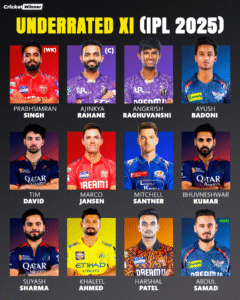
The Indian Premier League (IPL) has played a major role in developing fearless batters capable of succeeding under pressure.
Using Data and Technology
Technology has transformed modern cricket preparation.
India increasingly relies on:
- Video analysis
- Performance analytics
- Match simulations
- Opposition scouting
- Artificial intelligence-based performance tracking
- Biomechanical assessments
Every opposition player is studied in detail.
Batters receive data on bowlers’ preferred lengths, field placements, and variations, while bowlers prepare specific plans for each batter.
This analytical approach helps players make smarter decisions during high-pressure ICC matches.
Importance of Domestic Cricket and IPL
India’s domestic cricket structure remains one of its greatest strengths.
The Ranji Trophy, Vijay Hazare Trophy, Syed Mushtaq Ali Trophy, and IPL provide a continuous pipeline of talented players.
The IPL, in particular, offers young Indian cricketers opportunities to:
- Play alongside international stars
- Experience high-pressure games
- Learn from world-class coaches
- Develop advanced tactical awareness
Many players who perform consistently in the IPL earn opportunities at the international level, creating healthy competition for places in the national squad.
Mental Preparation
Winning ICC tournaments requires mental resilience as much as technical skill.
Sports psychologists now play an increasingly important role in India’s preparation.
Players work on:
- Handling pressure
- Concentration
- Confidence
- Decision-making
- Emotional control
Major ICC knockout matches often hinge on composure during critical moments. Developing mental toughness is therefore considered just as important as improving batting or bowling techniques.
Strategic Planning for Future ICC Events
The International Cricket Council continues to introduce changes to tournament formats, making preparation even more important. India is focusing on long-term planning by ensuring players are ready to adapt to different competition structures and match situations.
The coaching staff conducts match simulations, studies opposition strategies, and prepares players for high-pressure knockout games. Special attention is given to flexibility, allowing the team to adjust its playing XI according to conditions and opponents.
Looking Ahead
India remains one of the strongest teams in world cricket. The combination of experienced players, emerging stars, an outstanding domestic system, advanced sports science, and world-class coaching provides a solid foundation for future success.
However, winning ICC tournaments requires consistency, adaptability, and the ability to perform under immense pressure. India’s focus on improving fitness, strengthening squad depth, embracing technology, and nurturing young talent demonstrates a clear long-term vision.
As preparations continue, fans have every reason to be optimistic. If India can maintain player fitness, develop a balanced squad, and execute its plans in crucial knockout matches, the team will remain a leading contender for every major ICC title. The journey toward future World Cups and World Test Championships is already underway, and the foundations being built today could define the next golden chapter in Indian cricket history.